 No Duties or Customs Fees For EU & UK Customers
 Express Tracked UK Delivery On 1000s of Items
 90 Day Returns

Impact of Climate on Workwear Choices in the UK
BLGRain pelting down during a United Kingdom winter, or unpredictable summer heat, can put standard workwear to the test. For professionals in construction and outdoor trades, facing these elements means every garment must offer reliable protection, comfort, and durability. With the United Kingdom’s climate presenting frequent cold stress, heat stress and visibility challenges, this guide clarifies how climate directly drives the evolution of modern workwear and what features keep professionals protected year-round.
Table of Contents
- How Climate Shapes UK Workwear Needs
- Types of Weather-Resistant Workwear Solutions
- Material Innovations for Seasonal Protection
- Legal Obligations for Worker Safety
- Common Pitfalls in Workwear Selection
Key Takeaways
| Point | Details |
|---|---|
| Adaptability is Key | Layering systems enhance workwear versatility, enabling professionals to adjust quickly to sudden weather changes. |
| Focus on Legal Compliance | Employers must adhere to PPE regulations for worker safety, ensuring regular risk assessments and training. |
| Choose Innovative Materials | Modern workwear should incorporate advanced fabrics for temperature and moisture management, enhancing worker comfort. |
| Avoid Common Pitfalls | Thorough evaluations in workwear selection prevent safety hazards, making comfort and fit crucial considerations. |
How Climate Shapes UK Workwear Needs
The United Kingdom’s diverse climate presents unique challenges for professionals working in outdoor and construction industries, demanding highly specialised workwear solutions. Occupational health research indicates that workwear must adapt to protect workers from constantly changing environmental conditions, ranging from cold, wet winters to increasingly unpredictable summers.
Workers across various sectors face significant climate-related risks that directly impact their personal protective equipment (PPE) requirements. The key considerations include:
- Protection against cold stress during winter months
- Moisture management in wet and humid conditions
- Heat stress prevention during summer periods
- UV protection for extended outdoor work
- Wind resistance for construction and agricultural roles
Climate change is progressively transforming workwear design, with manufacturers developing increasingly sophisticated materials that offer enhanced protection. Climate impact studies suggest that adaptive clothing technologies will become crucial in maintaining worker safety and comfort across different environmental conditions.
Layering systems have emerged as a critical strategy for managing temperature variations, allowing professionals to adjust their clothing quickly and efficiently. Modern workwear now incorporates advanced fabrics that provide thermal regulation, moisture-wicking properties, and enhanced durability.
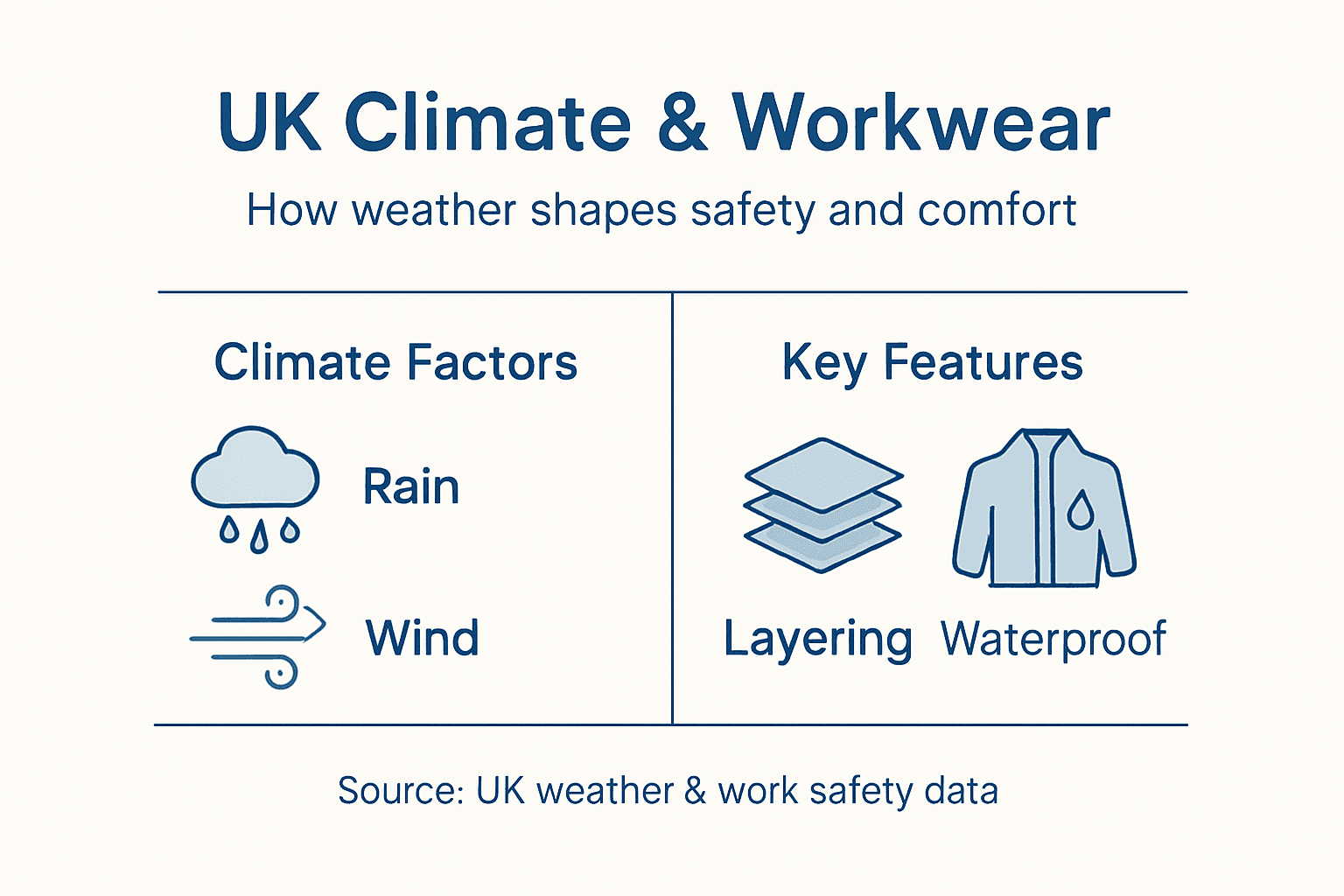
To aid in selecting appropriate workwear, here is a summary of key weather challenges and the corresponding recommended features:
| Climate Challenge | Recommended Workwear Feature | Added Benefit |
|---|---|---|
| Sudden temperature shifts | Layering systems | Easy adaptation to conditions |
| Persistent rainfall | Waterproof outer fabrics | Keeps wearer dry and comfortable |
| Intense sun exposure | UV-protective materials | Shields against harmful rays |
| High winds | Wind-resistant jackets and trousers | Reduces heat loss |
| Humidity/sweat | Breathable, moisture-wicking fabrics | Minimises sweat accumulation |
Pro tip: Invest in versatile, multi-functional workwear that can be easily layered to accommodate rapid weather changes throughout the workday.
Types of Weather-Resistant Workwear Solutions
Workwear solutions in the United Kingdom must address the complex challenges posed by diverse and unpredictable weather conditions. High visibility clothing standards play a critical role in protecting workers across various outdoor industries, ensuring safety and visibility in challenging environmental circumstances.
The primary categories of weather-resistant workwear include:
- Waterproof outer layers designed to repel rain and moisture
- Thermal insulated garments for cold weather protection
- Breathable fabrics that manage internal body temperature
- UV-resistant materials for prolonged outdoor exposure
- Wind-resistant jackets and trousers
Modern workwear technologies have evolved to provide comprehensive protection against multiple environmental challenges. Outdoor working guidelines emphasise the importance of clothing that not only protects against temperature extremes but also maintains worker comfort and mobility.
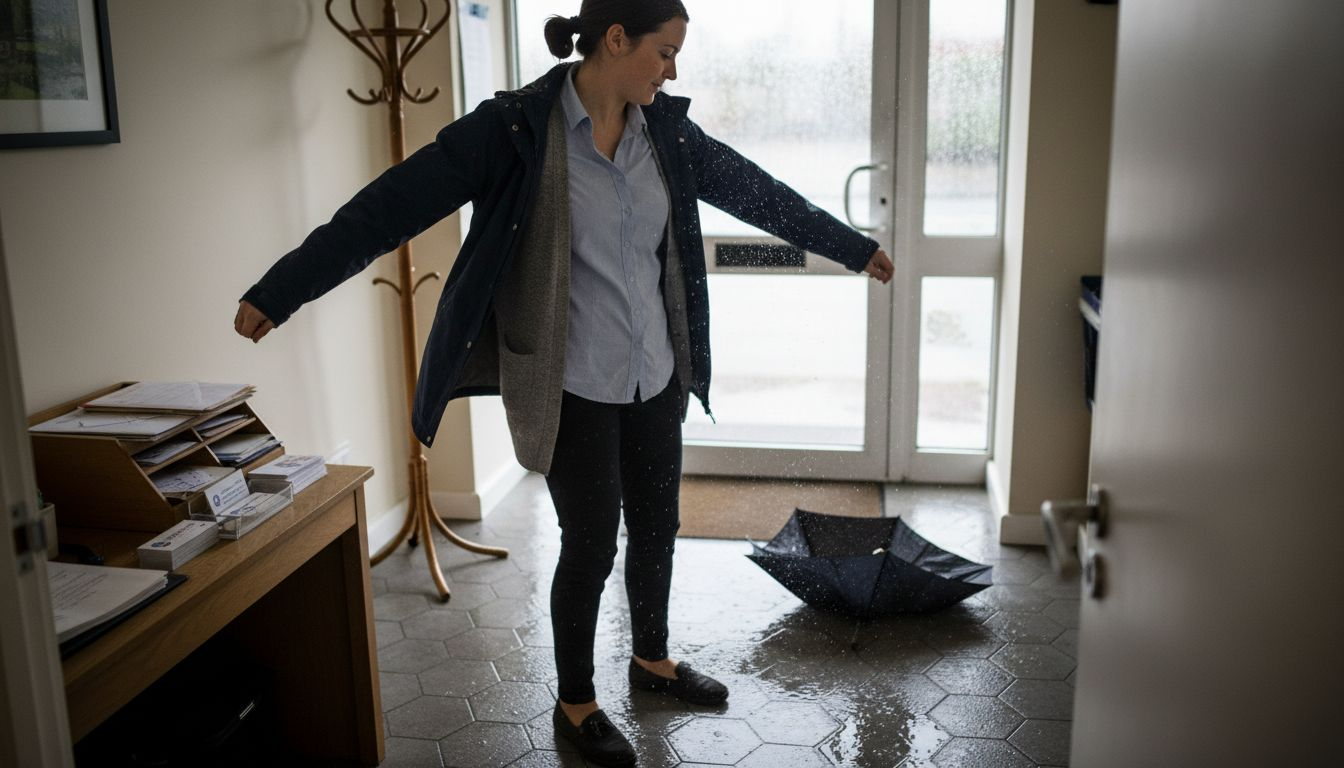
Layering systems remain the most effective approach to managing variable weather conditions, allowing professionals to adapt quickly to changing environments. Contemporary workwear manufacturers now incorporate advanced materials like moisture-wicking fabrics, synthetic insulators, and integrated ventilation systems to enhance worker protection and comfort.
Pro tip: Select modular workwear systems that allow easy addition or removal of layers to maintain optimal body temperature throughout challenging work environments.
Material Innovations for Seasonal Protection
The United Kingdom’s workwear industry continues to push technological boundaries, developing sophisticated materials that respond dynamically to challenging seasonal conditions. Textile innovations in workwear have transformed protective clothing from simple garments into intelligent systems designed to adapt to varying environmental demands.
Key material innovations in seasonal workwear include:
- Adaptive thermal fabrics that adjust insulation based on body temperature
- Moisture-wicking technologies that prevent sweat accumulation
- Nano-engineered waterproof coatings for enhanced weather resistance
- Breathable membrane systems that regulate internal climate
- UV-protective integrated materials for sun exposure protection
UK innovation strategies are driving advanced textile development, focusing on creating smart materials that provide comprehensive protection while maintaining worker comfort. Modern workwear now integrates multiple functional technologies, allowing professionals to work effectively across diverse environmental conditions.
Performance textiles represent the cutting edge of protective clothing, combining advanced materials science with ergonomic design principles. These sophisticated fabrics not only shield workers from external elements but also actively manage internal body conditions, representing a significant leap forward in occupational safety and comfort.
Below is a comparison of traditional versus modern performance textiles used in workwear:
| Attribute | Traditional Textiles | Modern Performance Textiles |
|---|---|---|
| Thermal Regulation | Basic insulation | Dynamic temperature control |
| Moisture Management | Limited | Advanced wicking properties |
| Weather Resistance | Water-repellent | Nano-engineered waterproof |
| UV Protection | Minimal | Integrated UV-blocking |
| Comfort & Fit | Standard | Ergonomic, adaptive design |
Pro tip: Invest in multi-functional workwear that incorporates layered material technologies to maximise protection and adaptability across seasonal variations.
Legal Obligations for Worker Safety
Employers in the United Kingdom face significant legal responsibilities when it comes to protecting workers through appropriate workwear and personal protective equipment (PPE). Personal Protective Equipment regulations mandate comprehensive safety measures that go beyond simple clothing provision, requiring a proactive approach to workplace protection.
Key legal obligations for employers include:
- Conducting thorough risk assessments for workplace hazards
- Providing appropriate PPE free of charge
- Ensuring proper maintenance and replacement of safety equipment
- Delivering comprehensive training on PPE usage
- Maintaining detailed documentation of safety protocols
Health and Safety workplace regulations emphasise the employer’s duty to protect worker welfare, extending legal responsibilities to all employee classifications. This includes casual workers, contractors, and permanent staff, ensuring a universal standard of workplace safety across different employment types.
Compliance requirements are not merely bureaucratic exercises but critical safeguards that protect workers from potential injury and employers from legal liability. The legal framework demands a holistic approach to workplace safety, integrating equipment, training, and ongoing risk management into a comprehensive protection strategy.
Pro tip: Regularly review and update your workplace safety documentation to ensure continuous compliance with the latest Health and Safety Executive regulations.
Common Pitfalls in Workwear Selection
Navigating the complex landscape of workwear selection requires meticulous attention to detail and comprehensive understanding of workplace risks. Personal protective equipment regulations highlight the critical importance of avoiding common mistakes that could compromise worker safety and organisational compliance.
Frequent workwear selection errors include:
- Neglecting thorough risk assessments
- Purchasing incorrectly sized protective gear
- Ignoring seasonal climate variations
- Failing to evaluate PPE compatibility
- Overlooking worker comfort and mobility
Workplace risk management emphasises that inappropriate workwear selection goes beyond mere inconvenience, potentially exposing workers to significant health and safety hazards. The consequences of poor workwear choices can range from reduced productivity to increased risk of injury.
Comprehensive evaluation of workwear requires understanding multiple factors, including environmental conditions, specific job requirements, and individual worker characteristics. Employers must adopt a holistic approach that considers thermal regulation, mechanical protection, visibility, and overall ergonomic design.
Pro tip: Conduct annual workwear audits to ensure your protective equipment remains compliant, functional, and aligned with current safety standards.
Stay Ready for UK Weather With Expert Workwear Solutions
Navigating the unpredictable UK climate demands workwear that offers layering systems, wind-resistant fabrics, and moisture-wicking properties to keep you comfortable and safe throughout your workday. This article highlights how sudden weather changes and seasonal extremes present real challenges for outdoor professionals. At MoreSports, we understand these vital needs and provide premium workwear designed to tackle the UK’s unique conditions head on.

Explore our carefully curated collection of durable workwear and safety boots to ensure you are well prepared no matter the weather. Visit MoreSports today for competitive prices, free UK delivery on orders over £25, and expert advice from our dedicated UK-based support team. Don’t leave your comfort and protection to chance – upgrade your workwear now and confidently face every shift with gear built for Britain’s climate.
Frequently Asked Questions
How do climate conditions influence workwear choices?
Climate conditions require workwear to be designed for temperature regulation, moisture management, UV protection, and resistance to wind and rain. This ensures that workers are safeguarded from various environmental challenges during their tasks.
What are the recommended features for workwear in wet conditions?
For wet conditions, workwear should include waterproof outer fabrics to keep the wearer dry, along with breathable materials that allow moisture to escape, preventing overheating and discomfort.
What is the importance of layering systems in workwear?
Layering systems allow professionals to quickly adapt their clothing to sudden temperature shifts and changing weather conditions. This flexibility leads to enhanced comfort and protection, as multiple layers can trap warmth, wick moisture, and offer additional weather resistance.
What are the common mistakes to avoid when selecting workwear?
Common mistakes include neglecting proper risk assessments, choosing the wrong size, ignoring seasonal variations, failing to evaluate compatibility of PPE, and overlooking comfort and mobility, all of which can expose workers to safety risks.
Recommended
- Workwear Insulation – Enhancing Safety on Site – More Sports
- What Is Seasonal Sports Gear and Why It Matters – More Sports
- What Is Workwear and Why Safety Matters Most – More Sports
- Technical Hiking Gear: Enhancing UK Outdoor Adventures – More Sports
- Adapting to Weather Conditions: Riding in Rain and Wind - CEU Builder
- Extreme Noise Terror - cut off shirt – Vintage Metal Store